Boston Condo Fees Are About to Change. The Median Price Won't Show You Why.
September 10, 2026
September 10, 2026
Boston condo buyers spend a lot of energy studying one number: the median sale price. As of the three months ending July 2026, that citywide figure sat at $850,000, up 2.4 percent year over year. It is the number every portal leads with, and it is the number that tells you the least about what happens between an accepted offer and a closing table this fall.
The number that actually matters right now is buried in a lender letter almost nobody outside the condo industry read when it landed in March. Since August 3, 2026, financing a condo in Boston with a conventional loan works differently than it did earlier this summer. The shortcut that used to let well-qualified buyers skip past a building's finances is gone. And a second, bigger change lands on January 4, 2027, one that will push monthly HOA fees higher in exactly the neighborhoods where they have stayed artificially low for years.
For years, a buyer putting down 10 percent or more on a primary-residence condo could qualify for something called Limited Review. The lender checked basic litigation and property information and moved on. The association's budget, its reserve balance, its insurance coverage, none of it got a close look, no matter how thin the building's finances actually were.
Fannie Mae retired that shortcut for loan applications dated on or after August 3, 2026. Freddie Mac eliminated its parallel Streamlined Review process the same day. Every condo project with more than ten units now goes through Full Review: budget, reserve study, insurance policy, delinquency rate, pending litigation, all of it, on every single loan application, regardless of how much equity the buyer is putting down.
That single change is why closings on Boston condos have been taking longer since late summer than they did before August. Lenders now have to request documents from HOA boards that, in a lot of buildings, are not used to producing them quickly. If the association is slow, and many are, the delay lands on the buyer's timeline, not the seller's.
The bigger shift is still ahead. Beginning with loan applications dated on or after January 4, 2027, the minimum reserve fund contribution required for a condo project to stay warrantable rises from 10 percent to 15 percent of the association's annual budgeted assessment income. An association can avoid the flat 15 percent if it has a reserve study completed within the last three years and is funding at that study's highest recommended level rather than a bare-minimum baseline. Baseline funding, the option many boards picked specifically because it let them keep dues low, is no longer accepted at all.
Do the math on a mid-sized association collecting $400,000 a year in common charges. A 10 percent reserve line is $40,000. A 15 percent line is $60,000. That extra $20,000 has to come from somewhere, and a board facing that gap has exactly three options: raise monthly fees, levy a special assessment, or take out a reserve fund loan. None of those options show up in a listing's asking price. All three show up in your first year of ownership.
Massachusetts has actually required condo associations to maintain an "adequate replacement reserve fund" separate from operating funds since long before this federal rule existed, under Chapter 183A of the Massachusetts Condominium Act. The law never defined what "adequate" meant in dollar terms. The new federal underwriting standard just gave that vague word a hard floor, and a lot of Boston buildings are about to find out they were under it.
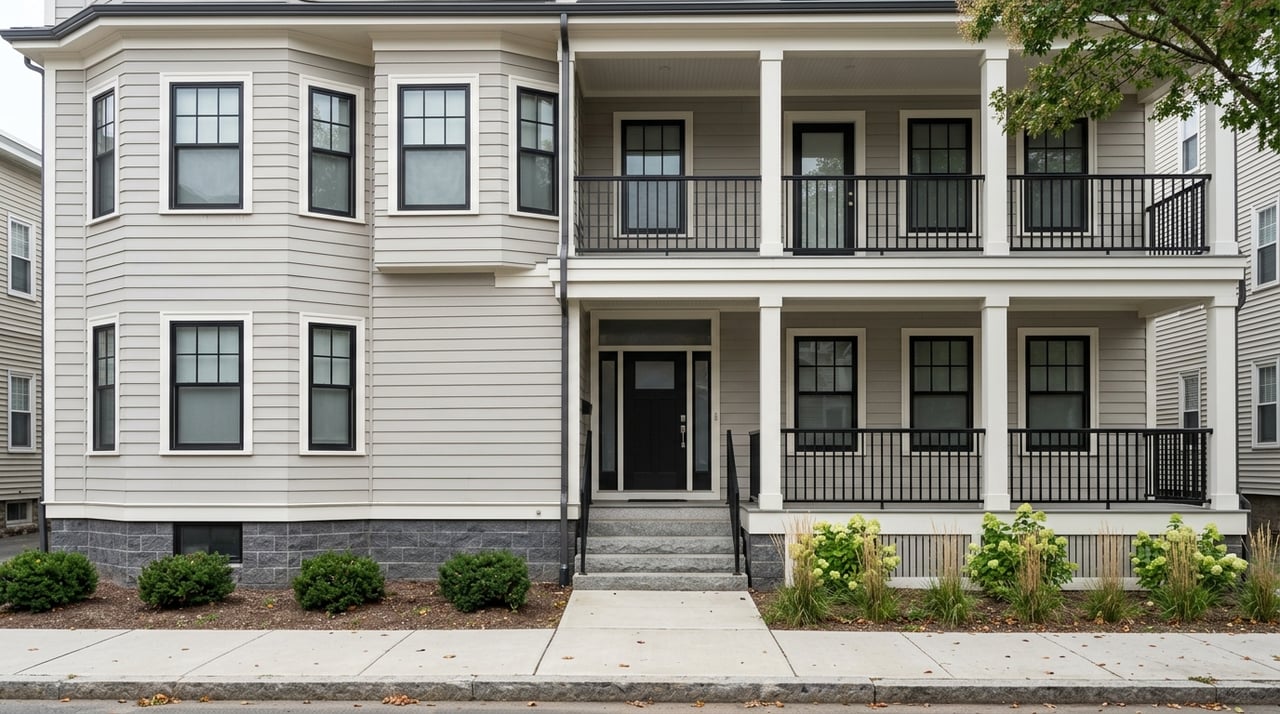
Not every Boston condo building faces the same exposure. Back Bay, Beacon Hill, Downtown, Seaport, and Bay Village are showing up repeatedly as the neighborhoods with the sharpest condo fee increases right now, and the reason has less to do with location and more to do with what those buildings are made of. Older buildings carry aging elevators, roofs, and mechanical systems that are approaching replacement age at the same time construction and insurance costs have climbed. Newer full-service towers, the kind you find in Seaport with concierge staff, harbor-facing lounges, and guest suites, already run higher fees to support that service level, and now face reserve math on top of it.
The pattern that gets Boston buildings into trouble almost never shows up on a listing sheet. Eric Churchill, executive vice president at Schernecker Property Services in Needham, has reviewed hundreds of condominium association budgets and says most set their fees too low to actually maintain the building. One community he consulted with kept dues artificially low for a decade and ended up spending $450,000 on routine painting and cosmetic patchwork rather than fund the structural repair the building actually needed. That is not a bargain. That is a bill with the due date moved.
"Buyers and their agents have to ask the questions," attorney Rich Rosa, cofounder of Buyers Brokers Only LLC, told the Boston Globe. "Are there any special assessments coming up?"
Here is the compliance timeline worth keeping on your phone if you are shopping this fall or winter:
| Date | What changes |
|---|---|
| March 18, 2026 | Fannie Mae and Freddie Mac announce the new rules; investor-concentration cap of 50 percent is eliminated immediately |
| July 1, 2026 | $50,000 per-unit insurance deductible cap takes effect; unit owners may need their own HO-6 policy |
| August 3, 2026 | Limited Review and Streamlined Review are retired; Full Review required on nearly all condo loan applications |
| January 4, 2027 | Minimum reserve funding rises from 10 percent to 15 percent of annual assessment income |
The reason regulators built this rule around reserve adequacy isn't abstract. Boston has its own cautionary tale. In 2007, trustees at Harbor Towers on the waterfront voted to spend $75.6 million replacing HVAC and other building systems after years of underfunded reserves caught up with the property. Individual unit owners were assessed between $70,000 and $400,000 each. Some sold rather than pay.
More recently, after a fire broke out in a Worcester Square condo building in the South End, rendering it unlivable, owners said more than $800,000 in insurance funds meant to repair and restore the property went missing under the previous property management firm's watch. That kind of governance failure is exactly what a Full Review is designed to surface before a buyer's money is on the line, not after.
The building's condition matters more than its address right now. Before you write an offer on any Boston condo, ask for:
A low monthly fee with no recent reserve study behind it is not a value. It is a question that hasn't been answered yet.
Does this affect FHA loans? No. FHA maintains its own separate condo approval process, distinct from Fannie Mae and Freddie Mac. A building that fails Full Review under conventional guidelines may still work with an FHA-approved loan.
Will every Boston condo see a big fee increase in January? No. Associations that already commissioned a recent reserve study and are funding at the study's highest recommended level can avoid the flat 15 percent requirement entirely. The buildings most exposed are the ones that never did that work.
Does any of this apply to single-family homes? No. These rules govern condominium and co-op financing specifically. Single-family and multi-family properties are not affected by Fannie Mae's condo project standards.
The median price tells you what a unit sold for. It doesn't tell you whether the building behind that unit can pass a lender's Full Review this fall, or what the reserve line will look like after January. Those are the numbers that determine your actual monthly cost of ownership and, in some cases, whether your loan gets approved at all.
If you're comparing condos across Back Bay, Seaport, the South End, or anywhere else in Boston right now, the documents matter as much as the listing photos. Your Partner Chris Real Estate reviews reserve studies, meeting minutes, and association financials as a standard part of every condo offer we help write, because the building's paperwork is where the real price of ownership actually shows up. Reach out and we'll walk through what a specific building's numbers mean for your budget before you're under contract, not after.
Stay up to date on the latest real estate trends.