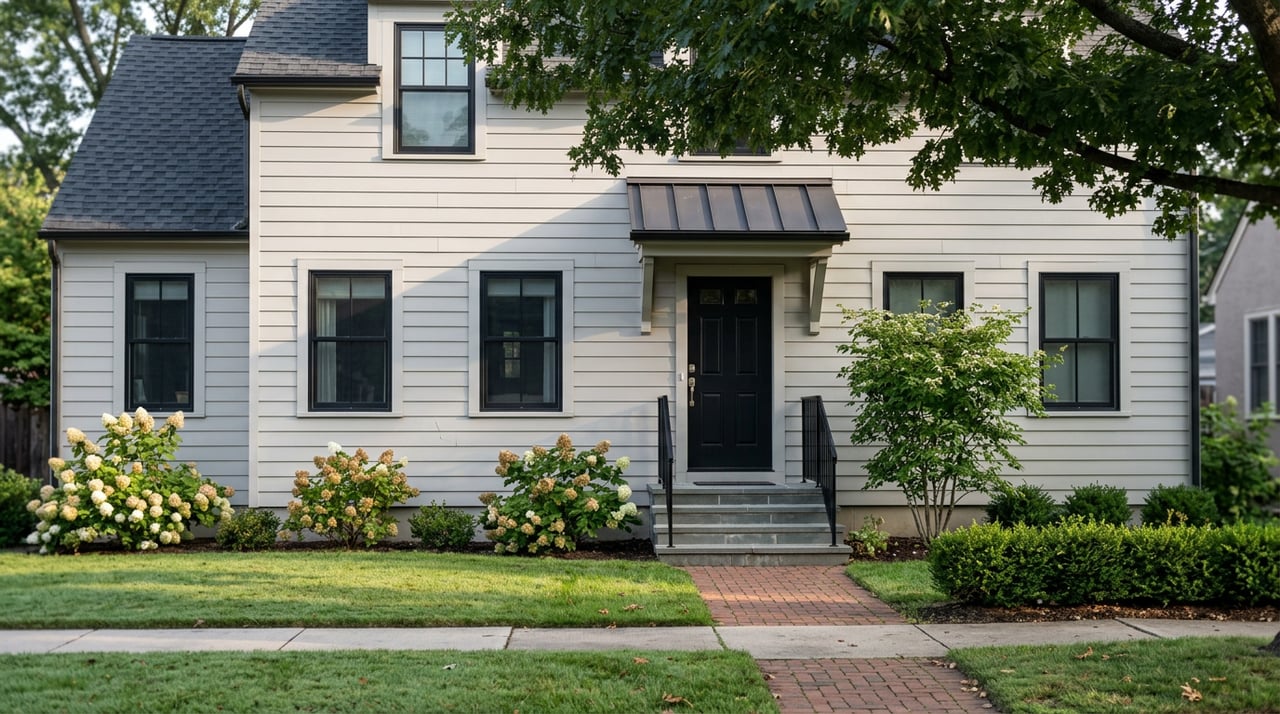
What if your rent could help pay your mortgage while you build equity in Boston? If you’re eyeing a classic triple‑decker, house hacking can be a smart path to ownership. You live in one unit, rent the others, and let the property work for you. In this guide, you’ll see simple, illustrative cash flows for common financing options, learn the key formulas, and understand Boston-specific costs that affect returns. Let’s dive in.
Triple‑deckers in Boston: what to expect
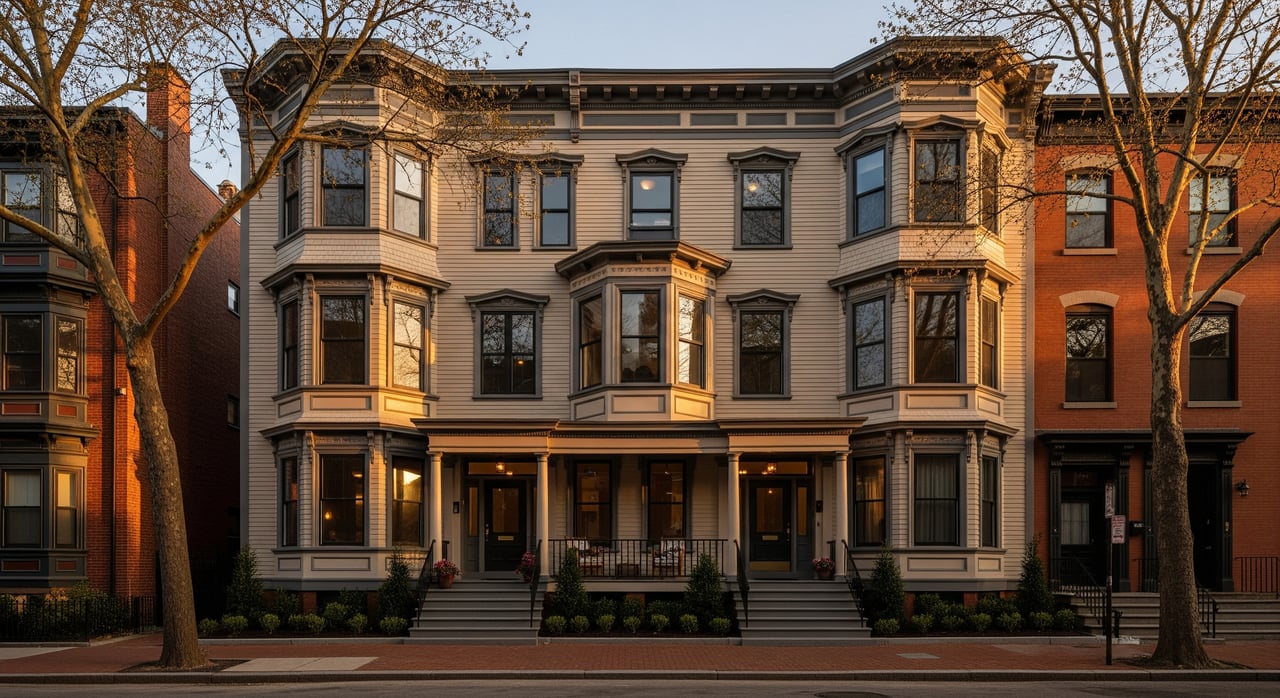
Boston triple‑deckers are often older buildings with character and quirks. Many were built before 1940, so plan for ongoing maintenance and potential system upgrades over time. Condition varies widely by neighborhood and renovation history.
Typical rent ranges for smaller apartment units in Boston vary by size and location:
- 1‑bed: about $2,000 to $3,000 per month
- 2‑bed: about $2,800 to $4,000 per month
- 3‑bed: about $3,500 to $5,000 per month
Rents swing with neighborhood, proximity to transit, updates, and parking. Even small changes in unit mix or finishes can shift your cash flow meaningfully.
How financing changes your cash flow
Your loan choice shapes monthly costs and how much of the other units’ rent a lender will count when you qualify.
FHA for owner‑occupied 2–4 units
- Low down payment: commonly about 3.5% down for qualified borrowers on 2–4 unit properties when you live in one unit.
- Mortgage insurance: upfront and annual mortgage insurance premiums add to monthly cost and reduce cash flow compared to loans without mortgage insurance.
- Occupancy: plan to move in shortly after closing and live there for at least 12 months, subject to FHA rules.
- Rental income for qualifying: lenders typically consider a portion of expected rents from the other units, often around 75% of market or lease rents, subject to documentation.
- County loan limits apply and change annually. Confirm the current limit for Suffolk County before you set your budget.
Conventional options for 2–3 units
- Down payment: programs vary. Some low‑down options may exist for strong borrowers, but many multi‑unit conventional loans require higher down payments. Putting 20% down removes private mortgage insurance.
- PMI: if your loan‑to‑value is above 80%, private mortgage insurance usually applies until you reach required equity.
- Rental income for qualifying: lenders often count about 75% of documented market or lease rents from the other units.
- Rate and total cost: well‑qualified borrowers with larger down payments can see lower total monthly costs compared to FHA, mainly due to no ongoing mortgage insurance.
What this means for you
- FHA can help you buy with less cash, but the monthly payment is usually higher due to mortgage insurance.
- Conventional with 20% down reduces monthly debt service and can move you closer to breakeven or positive cash flow.
- Always confirm with your lender how much rent they will count and what documents you need.
Build your pro forma step by step
Use conservative assumptions when modeling an older triple‑decker. Here’s a simple framework you can apply to any property.
Core formulas
- Gross Potential Rent (GPR) = total scheduled rent for all rentable units
- Effective Gross Income (EGI) = GPR − vacancy/collection loss + other income
- Operating Expenses = property taxes + insurance + owner‑paid utilities + maintenance + management + capital reserves
- Net Operating Income (NOI) = EGI − Operating Expenses
- Debt Service = annual principal + interest + any mortgage insurance
- Cash Flow Before Tax = NOI − Debt Service
- Cash‑on‑Cash Return = Cash Flow Before Tax ÷ cash invested
- Debt Service Coverage Ratio (DSCR) = NOI ÷ Debt Service
- Cap Rate = NOI ÷ purchase price
Typical Boston assumptions for a house hack
- Vacancy and collection loss: 5% of GPR
- Other income: $0 to $200 per unit per month depending on laundry, parking, or storage
- Property taxes: about 0.9% to 1.3% of market value annually
- Insurance: about $2,000 to $3,000 per year for a small multifamily
- Utilities: owner‑paid common or unit utilities can run $150 to $400 per unit per month depending on systems and lease terms
- Maintenance and repairs: 7% to 10% of EGI for older buildings
- Property management: 0% if you self‑manage; 6% to 10% of EGI if you hire a manager
- Capital reserves: plan roughly $250 to $500 per unit per month for larger items on older buildings
- Financing examples: show 30‑year fixed, a rate range such as 5.5% to 7.5%, and down payment options like FHA 3.5% and conventional 20%
Illustrative cash flows: a Boston triple‑decker
Numbers below are purely illustrative so you can see how the math works. Plug in your own price, rates, and rents to match current conditions.
Baseline scenario: $900,000 purchase, two rentals at $2,600 and $2,400
Assumptions
- Units: 3 total. You live in one. Two units are rented.
- Monthly rent total: $5,000 (annual GPR $60,000)
- Vacancy: 5% ($3,000)
- Other income: $600 per year (laundry)
- EGI: $60,000 − $3,000 + $600 = $57,600
- Operating expenses:
- Property tax: 1.0% of price ≈ $9,000
- Insurance: $2,500
- Owner‑paid utilities: $3,600
- Maintenance: 8% of EGI = $4,608
- Management: $0 (self‑managed)
- Capital reserves: $3,600
- Total operating expenses: $23,308
- NOI: $57,600 − $23,308 = $34,292
Financing A: FHA 3.5% down
- Down payment: $31,500
- Loan amount: $868,500
- Example interest rate: 6.5% (30‑year fixed)
- Estimated P&I: about $5,488 per month (≈ $65,856 per year)
- FHA annual mortgage insurance: about 0.85% of loan ≈ $7,381 per year
- Total annual debt service: ≈ $73,237
- Cash Flow Before Tax: $34,292 − $73,237 = −$38,945 per year
- Performance snapshot: Cap rate ≈ 3.8%. DSCR ≈ 0.47.
Financing B: Conventional 20% down
- Down payment: $180,000
- Loan amount: $720,000
- Example interest rate: 6.5% (30‑year fixed)
- Estimated P&I: about $4,550 per month (≈ $54,600 per year)
- Total annual debt service: ≈ $54,600
- Cash Flow Before Tax: $34,292 − $54,600 = −$20,308 per year
- Performance snapshot: Cap rate ≈ 3.8%. DSCR ≈ 0.63. Cash‑on‑cash, assuming down payment only as cash invested, ≈ −11%.
Takeaway: With these rents and costs, FHA increases the payment and produces a larger shortfall. A bigger down payment helps, but this example still runs negative. Your path to breakeven is higher rents, a lower price, a lower rate, or some combination.
Sensitivity: same $900,000 price, higher rents total $6,000 per month
Assumptions
- Annual GPR: $72,000
- Vacancy: 5% ($3,600)
- Other income: $600
- EGI: $72,000 − $3,600 + $600 = $69,000
- Expenses: taxes $9,000; insurance $2,500; utilities $3,600; maintenance 8% of EGI = $5,520; reserves $3,600 → Total ≈ $24,220
- NOI: $69,000 − $24,220 = $44,780
Conventional 20% down at 6.5%
- Debt service: ≈ $54,600
- Cash Flow Before Tax: $44,780 − $54,600 = −$9,820 per year
Takeaway: A $1,000 monthly bump in total rent cuts the shortfall by about half. Push rents further, reduce price, or improve terms and you can get close to breakeven.
Price band comparison: isolate price with the same $5,000 total rent
These quick cuts show how price alone moves the math while rents stay the same. All other assumptions mirror the baseline.
Price point: $700,000
- EGI: $57,600; taxes ≈ $7,000; insurance $2,500; utilities $3,600; maintenance $4,608; reserves $3,600 → OpEx ≈ $21,308
- NOI: $57,600 − $21,308 = $36,292
- FHA 3.5% down at 6.5%: loan ≈ $675,500; P&I ≈ $51,228; FHA MI ≈ $5,742 → Debt service ≈ $56,970 → Cash Flow ≈ −$20,678
- Conventional 20% down at 6.5%: loan ≈ $560,000; P&I ≈ $42,480 → Cash Flow ≈ −$6,188
Price point: $1,200,000
- EGI: $57,600; taxes ≈ $12,000; insurance $3,000; utilities $3,600; maintenance $4,608; reserves $3,600 → OpEx ≈ $26,808
- NOI: $57,600 − $26,808 = $30,792
- FHA 3.5% down at 6.5%: loan ≈ $1,158,000; P&I ≈ $87,804; FHA MI ≈ $9,843 → Debt service ≈ $97,647 → Cash Flow ≈ −$66,855
- Conventional 20% down at 6.5%: loan ≈ $960,000; P&I ≈ $72,816 → Cash Flow ≈ −$42,024
Takeaway: Price is powerful. Lower acquisition cost and taxes improve NOI and shrink the gap even if rents do not change.
Rent tiers at $900,000 price, conventional 20% down
Use the same costs from the baseline and flex only rent:
- Low rent tier $4,400 total: EGI ≈ $50,160; NOI ≈ $26,852 → Cash Flow ≈ $26,852 − $54,600 = −$27,748
- Mid rent tier $5,000 total: EGI ≈ $57,600; NOI ≈ $34,292 → Cash Flow ≈ −$20,308
- High rent tier $6,000 total: EGI ≈ $69,000; NOI ≈ $44,780 → Cash Flow ≈ −$9,820
Even within one property type, achievable rents by unit mix and neighborhood can swing results by thousands per year.
Boston realities that affect cash flow
- Rental registration and inspections: Many rentals in Boston must be registered with the city. There are requirements and fees, and penalties for noncompliance can apply.
- Building age and lead paint: Pre‑1978 buildings may have lead paint, and older systems can require upgrades. Budget for larger capital items like roofs, windows, heating, and wiring.
- Property taxes and assessments: City assessments change, which can change your annual tax bill. Confirm the current tax rate and watch for reassessment after substantial improvements.
- Zoning and use: If you plan future changes like condo conversion or layout updates, confirm zoning and permitted uses first.
- Landlord‑tenant law: Massachusetts has clear rules for habitability, notice periods, security deposits, and eviction procedures. Timelines and legal costs can impact vacancy and cash flow.
- Insurance: Costs vary with building age, liability exposure, and systems. Water and weather risks matter in Boston housing stock.
- Parking and transit: Areas with scarce parking or superior transit access can see meaningful rent differences.
How to use these examples
- Start with conservative inputs. Older triple‑deckers often need higher maintenance and reserves.
- Model both FHA and conventional. See how mortgage insurance and down payment change your cash flow and DSCR.
- Stress‑test rents and vacancy. Try low, mid, high rents and at least 5% vacancy.
- Plan your management approach. Self‑managing can save 6% to 10% of EGI, but it costs your time.
- Validate before you offer. Confirm current loan limits, rates, taxes, and market rents to match the building and neighborhood you are targeting.
Ready to run numbers on a specific triple‑decker and align them with your goals? Get local, hands‑on help from a team that works these deals every week. Reach out to YPC Real Estate LLC to start a custom house‑hack plan or to line up showings, rental comps, and lending introductions.
FAQs
Can you use FHA to buy a Boston triple‑decker and count rents from other units?
- Yes. FHA permits owner‑occupied 2–4 unit purchases and lenders often count a portion of the other units’ rents, commonly around 75%, when you qualify.
How much down do you need to get close to breakeven on a triple‑decker?
- Larger down payments reduce debt service and can move you toward breakeven, but the answer depends on price, rate, taxes, and achievable rents for your exact property.
What rent ranges should you use when modeling Boston units?
- As a starting point, try about $2,000 to $3,000 for 1‑beds, $2,800 to $4,000 for 2‑beds, and $3,500 to $5,000 for 3‑beds, then adjust for location, finishes, and transit access.
What ongoing costs do Boston triple‑deckers typically carry beyond the mortgage?
- Common items include property taxes, insurance, owner‑paid utilities, routine maintenance, a capital reserve for big items, and possibly professional management.
Do you have to register rental units with the City of Boston?
- Many rental properties require city registration and compliance with inspection standards, and there can be fines for failing to meet requirements.
Should you self‑manage or hire a property manager for a house hack?
- Self‑management can save 6% to 10% of EGI, but a manager can reduce hassle. Choose based on your time, skills, and the complexity of the building.