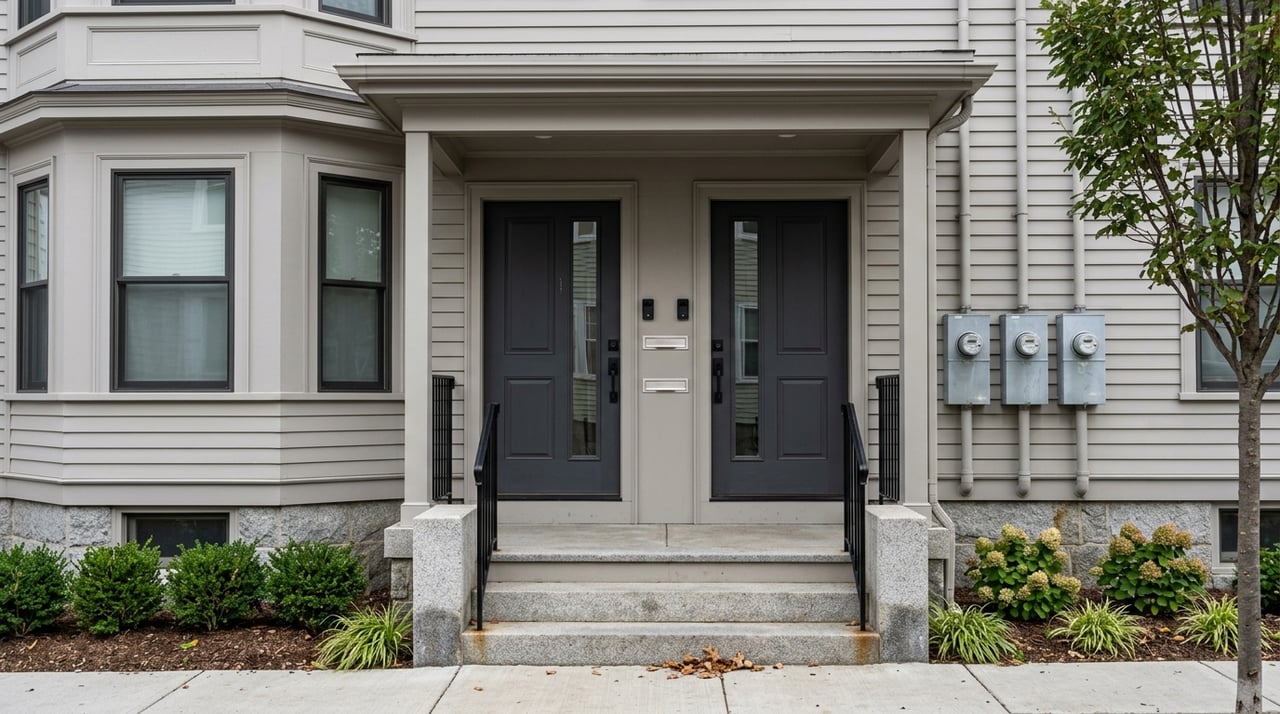
Boston Multi Family Investment: What Buyers Should Know
May 28, 2026
May 28, 2026
If you have looked at Boston multi-family property lately, you already know the headline: prices are high, competition is real, and the math has to work. That can feel intimidating, especially if you are trying to buy a two-family or triple-decker that needs updates while still producing solid rent. The good news is that Boston remains a tight rental market, and if you understand rents, expenses, zoning, and compliance, you can evaluate opportunities with much more confidence. Let’s dive in.
Boston continues to attract strong interest because the rental market remains tight. Yardi Matrix reported advertised asking rents at $2,859 on a trailing three-month basis through December 2025, with stabilized occupancy at 96.2% in November. Realtor.com also reported a Boston-Cambridge-Newton median asking rent of $2,851 in January 2026.
That kind of rent and occupancy picture matters if you are buying for cash flow, house hacking, or long-term appreciation. Marcus & Millichap reported Boston posted its strongest net absorption since 2021 in 2025 even after 8,000 units were delivered. CBRE also described multifamily in Boston as a sector with continued strong investment interest, with cap rates expected to remain broadly stable in 2026.
A Boston multi-family investment is not just about unit count. It is also about the kind of building you are buying, how old it is, and what that means for repairs, systems, and compliance.
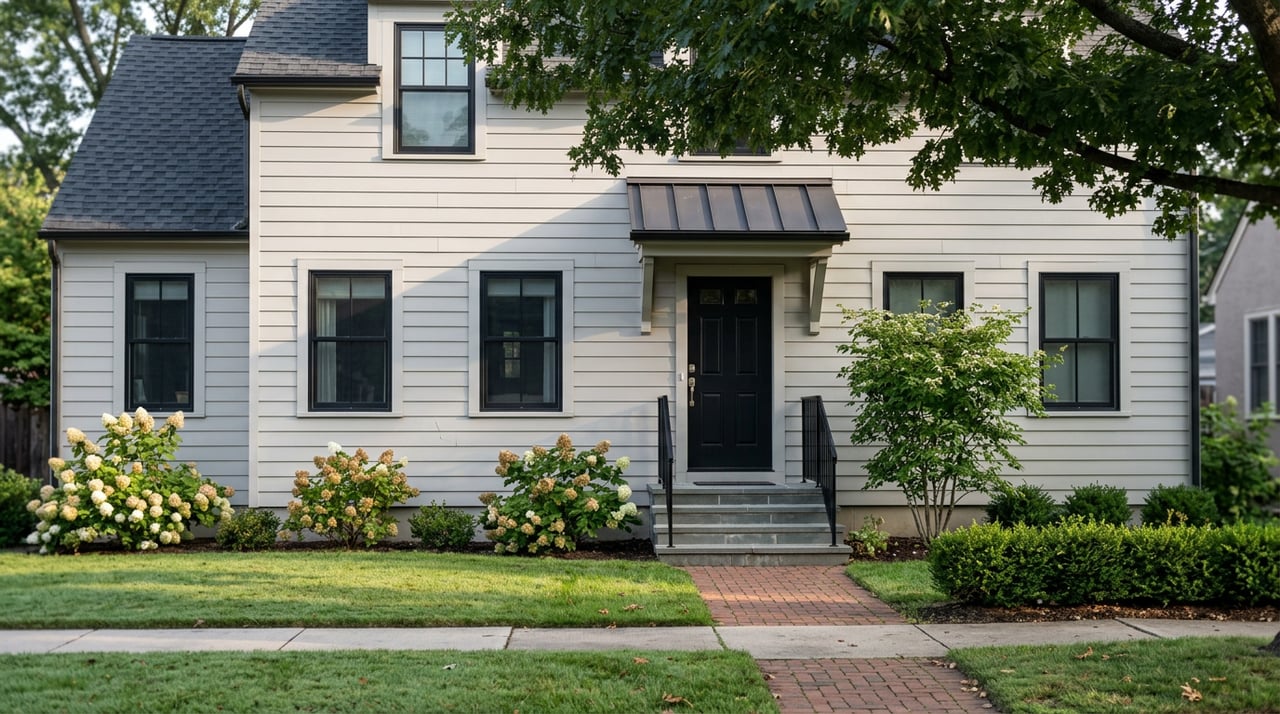
Boston identifies the triple-decker as a signature local housing type, especially those built from the 1880s through the 1930s. These properties are common across the city and often appeal to owner-occupants and small investors because they can offer three units on a relatively compact footprint.
That said, many of these buildings are older by national standards. The Greater Boston Housing Report Card says more than 30% of the region’s housing units were built before 1940, which is a higher share than any of the 10 most populous U.S. metro areas. For you, that means inspections, deferred maintenance, and capital planning are not side issues. They are central to the investment.
Older buildings can have charm and strong layouts, but they also come with practical risks. Boston’s rental-condition checklist requires basics like functioning smoke and carbon-monoxide detectors, heat, water, adequate exits, toilets, no harmful defects, no pest infestation, no garbage or waste, and visible owner contact information.
If the property was built before 1978, lead-law paperwork becomes especially important. Boston’s rental materials ask whether a property was built before or after 1978, and Massachusetts requires landlords and tenants to sign and keep lead-law notification and certification forms for pre-1978 rentals. If a child under six will live in the unit, the landlord must delead or bring hazards under interim control.
One of the biggest mistakes small investors make is underwriting based only on optimistic online asking rents. In Boston, it helps to use a conservative benchmark first, then compare it to current market asking rents.
HUD’s FY2026 Boston-Cambridge-Quincy HMFA Fair Market Rents provide a useful baseline:
HUD defines these as gross rent estimates, which include rent plus tenant-paid utilities except telephone, cable or satellite, and internet. That makes them a helpful conservative benchmark, not a direct replacement for what a specific renovated unit may actually command.
Those HUD figures line up fairly well with public rent trackers. Yardi Matrix reported Boston asking rents at $2,859, and Realtor.com reported a median asking rent of $2,851 in early 2026. In practical terms, that supports thinking about Boston metro rents as broadly in the high-$2,800s to low-$3,000s, while still adjusting by bedroom count, condition, and location.
If you are looking at a three-unit building, that distinction matters. A renovated two-bedroom in one part of Boston may lease differently than an older floor-through with dated systems or utilities included. That is why it is smart to stress test your numbers instead of relying on best-case rent projections.
For a small investor, it helps to start with a clean, public-data example. Imagine a three-unit property where each unit is underwritten at HUD’s 2-bedroom fair market rent of $2,941 per month.
That produces annual gross scheduled rent of $105,876. If you apply a 5% vacancy allowance, effective gross income drops to about $100,582. That is a useful starting point because it bakes in some downtime and keeps your expectations grounded.
In Boston, expenses can move your deal from workable to weak very quickly. Key line items to review include:
Boston’s FY26 residential property-tax rate is $12.40 per $1,000 of assessed value. On a $1.2 million assessment, that works out to about $14,880 annually before any exemption. If you plan to live in one unit, Boston’s FY26 residential exemption can reduce the bill by up to $4,353.74.
CBRE’s H2 2025 cap-rate survey placed Boston infill multifamily in roughly the mid-4% to about 5% range for stabilized Class A assets, and roughly the high-4% to mid-5% range for Class A value-add assets. For a practical rule of thumb, stabilized Boston multifamily often trades near the 5% cap-rate mark, with lower-risk assets trading lower and more work-intensive properties trading higher.
That does not mean every small multi-family should be valued at exactly a 5% cap rate. It means you should treat cap rate as one signal among many, along with condition, tenancy, renovation needs, and tax treatment. In Boston, small differences in expenses or rehab scope can have a big impact on actual returns.
Before you get too excited about adding units or reconfiguring a building, check zoning early. Boston tells owners to verify zoning by address through the BPDA zoning viewer, which shows district rules, overlays, and whether a use is allowed, conditional, or forbidden.
If your intended use is not as-of-right, you may need ZBA relief and a review process that can take months. For investors, that means your business plan should match the property’s current legal status and zoning reality, not just what seems physically possible.
Boston’s ADU program may be relevant if you plan to live in a 1-, 2-, or 3-family home and improve the property over time. The city says owner-occupants of these properties may be able to build an accessory dwelling unit, but the project still must satisfy zoning and building-code rules and may require ZBA approval.
This can create long-term value, but it is not automatic. If ADU potential is part of your investment strategy, confirm feasibility before you count it in your numbers.
If you are considering larger redevelopment, Boston’s inclusionary zoning rules become important. The city states that market-rate projects with seven or more units must include 15% to 17% income-restricted housing, plus 3% voucher units in large rental projects.
For most small investors buying existing two- and three-family homes, this may not apply. Still, it is an important reminder that scale changes the rules in Boston.
In a market with older buildings and tight housing, compliance needs to be part of your plan from day one. This is especially true if you are buying your first investment property in the city.
Boston requires rental-property registration every year by July 1. The fee is $25 per unit for first-time registrations and $15 per unit for renewals. The city may assess a $300 monthly penalty for late registration, and it inspects registered properties at least once every five years.
If you live outside Massachusetts, you also need to designate a Boston-area emergency contact. This is a small detail that can create a real issue if you overlook it.
Boston’s rental guidance reminds owners that a security deposit may not exceed one month’s rent. Last month’s rent can also be collected at move-in. The security deposit must be held in a separate interest-bearing Massachusetts bank account.
These are not minor bookkeeping details. They are part of operating correctly, protecting yourself, and avoiding preventable disputes.
Massachusetts requires a proper notice to quit before an eviction case can be filed. For month-to-month tenancies-at-will, the tenancy can generally be ended with at least 30 days’ written notice.
If you are buying a tenant-occupied property, review the lease structure, payment history, and occupancy status carefully. A deal that looks simple on paper can become much more complex if you assume you can make immediate changes without following the required process.
Some Boston investors are drawn to buildings with a residential component plus a storefront or office space. That can work, but the tax treatment deserves close attention.
Boston’s FY26 commercial tax rate is $26.96 per $1,000, which is far higher than the residential rate of $12.40 per $1,000. If you are comparing a pure residential multi-family to a mixed-use asset, make sure your underwriting reflects that difference before you decide which path offers the better return.
In a market like Boston, strong investing often comes down to discipline. You do not need perfect conditions. You need a realistic plan, accurate numbers, and a clear understanding of the building you are buying.
Here are a few smart filters to use when reviewing Boston multi-family opportunities:
Boston can still be a strong market for small multi-family investors, especially if you are thinking long term or planning to live in one unit. The key is to buy with your eyes open and treat due diligence as part of the investment strategy, not just a box to check.
If you are weighing a Boston two-family, three-family, or small investment property, working with a local team that understands pricing, zoning realities, and owner-occupant versus investor strategy can save you time and help you avoid expensive assumptions. To talk through your options with a hands-on local brokerage, connect with YPC Real Estate LLC.
Stay up to date on the latest real estate trends.